Farm and Harvest Words for Kids
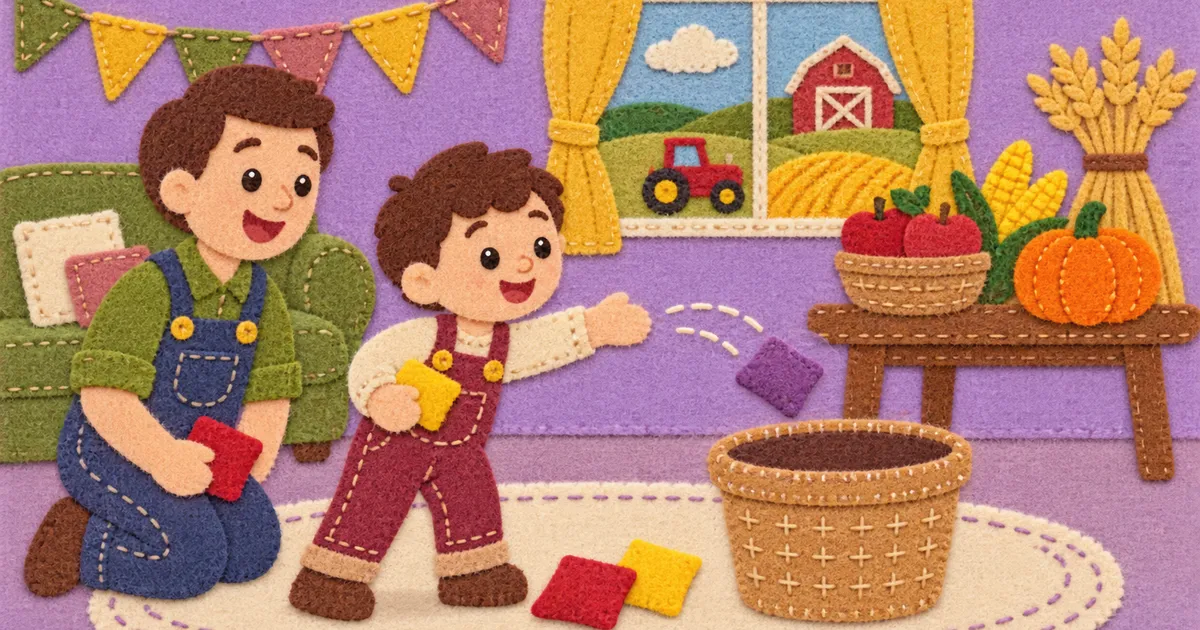
A child can begin farm English with about 30 words for animals, crops, tools, places, and harvest actions. Farm and Harvest Words and Activities for Kids should link each word to an object a child can see, touch, draw, or act out. Start with nouns such as cow, apple, and tractor, then add verbs such as plant, grow, pick, and carry. Practise short phrases: “Plant the seed,” “The field is wet,” and “We picked three apples.”
📥 Farm and Harvest Words for Kids
A printable word-and-sentence practice sheet for learning about farms, crops, machines, and harvest time.
Leave your email — we'll send the PDF to your inbox.No spam — the PDF plus one short reminder. Unsubscribe anytime.
Core Farm and Harvest Vocabulary
Organise Farm and Harvest Words and Activities for Kids by meaning. Teach one small group at a time, then combine groups after your child recognises most words.
Combine words in pairs and short phrases: ripe tomato, muddy field, feed the hens, carry the basket, and harvest the wheat. Children can point, sort, or act before speaking.
Farm Words in Complete Sentences
Farm and Harvest Words and Activities for Kids are easier to remember when each word has a role in a sentence. Begin with patterns: “This is a barn,” “The horse is in the field,” and “The farmer drives a tractor.” Change one element: “The cow is in the field” or “The horse is near the barn.”
When single sentences feel easy, add a sequence: “First, we dig the soil. Next, we plant the seeds. Then, we water them. Later, the plants grow. At harvest time, we pick the vegetables.” Older children can explain cause and effect: “The ground is dry, so the plants need water.”
How to Introduce the Words
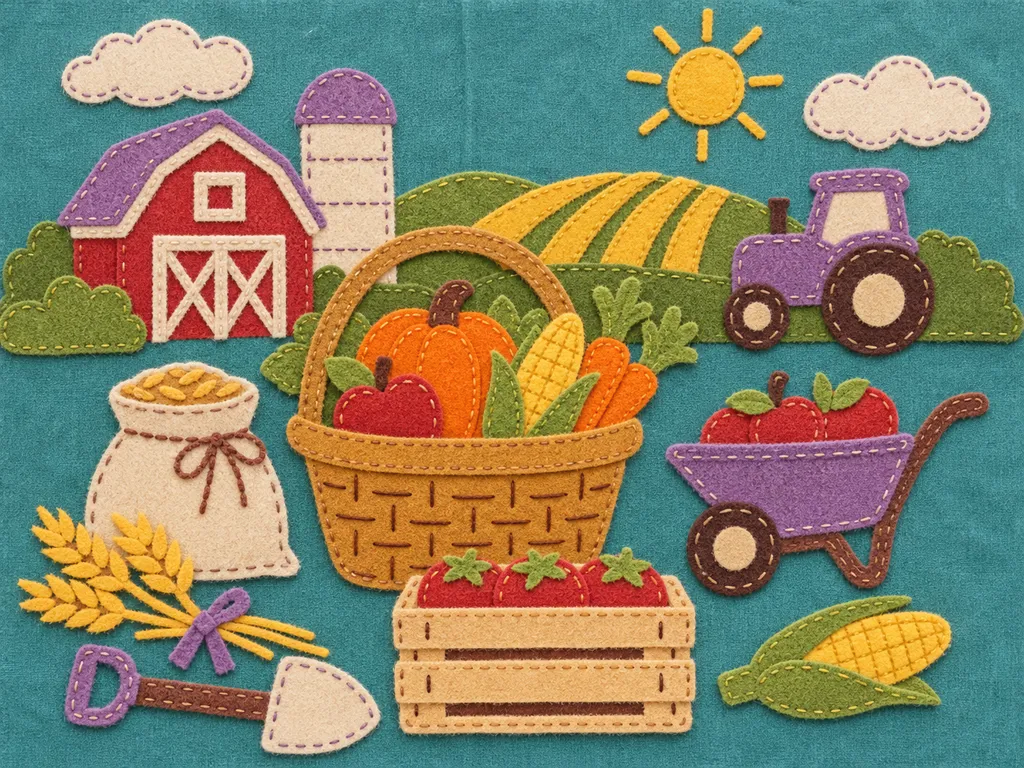
When introducing Farm and Harvest Words and Activities for Kids, choose six to eight related words. Show a picture or object, say its name, and ask your child to point. Recognition comes before speaking.
Next, assign a short task: “Put the apple in the basket,” “Park the tractor beside the barn,” or “Give the hen two seeds.” Use toys, blocks, food pictures, or hand-drawn cards. Focus on accurate listening.
A multilingual child may already know the concept in another language. Connect the familiar term to its English match, then return to an English phrase: “Yes, that is a barn. The cow is inside the barn.”
Activities for Different Ages
Adapt Farm and Harvest Words and Activities for Kids to your child’s attention span, reading skill, and interests. Use age to choose a task and the child’s response to set the pace.
Mixed-age families can reuse one picture set. A younger child names a pumpkin. An older child describes its colour, size, and location. A teenager explains how farmers plant, care for, and harvest it. Each child studies the same theme at an appropriate level.
Practice Ideas for Home
Practise farm English for five to ten minutes. Make a pretend market, draw an orchard, sort toy animals, or prepare food while naming its source. Repeat the same vocabulary in a new setting rather than replacing it daily.
Build a Harvest Basket
Place six food pictures on a table. Ask your child to choose three, name them, and put them in a basket. Then swap roles. Add clues such as “Pick something red” or “Find a vegetable that grows under the soil.”
End with a playful check. Remove one card and ask, “What is missing?” Offer a false sentence to correct: “A tractor is an animal.” Across LearnLink lessons, tutors vary the prompt while retaining familiar target words.
Common Mistakes and Useful Corrections
Do not teach farm and farmer as synonyms. A farm is a place or business; a farmer is a person. A crop is a plant grown for use, while a harvest means collected crops or the act of collecting them.
Check action verbs too. We usually pick apples, dig up potatoes, feed animals, and water plants. A child may say “take apples” or “give water the plants.” Respond with the correct phrase and invite one calm repetition.
Allow for regional English. In some places, corn commonly means maize; elsewhere, it has a wider meaning. Pictures prevent confusion. Practise irregular forms in context: “one leaf, two leaves” and “one sheep, three sheep.”
- Choose five farm picture cards and ask your child to name each one.
- Read one farm book aloud, then correct mispronounced harvest words gently.
- Sort eight word cards into animal, crop, tool, and action groups.
- Model one correct sentence, then invite your child to repeat it.
- Play a matching game using six farm words and corresponding pictures.
When a word has several meanings or pronunciations, Cambridge Dictionary is a useful check before turning it into child-friendly examples.
Frequently Asked Questions
How Many New Farm Words Should My Child Learn at Once?
Start with four to eight related words, based on your child’s age and confidence. Keep them through multiple practice sessions. Add more after your child recognises pictures, follows an instruction, and uses words without a model. A short active set beats a long list forgotten after a day.
What If My Child Knows the Farm Words in Another Language?
Use existing knowledge as a bridge. Your child understands the animal, object, or action; the task is attaching an English word to that concept. Compare terms briefly, then practise the English item in a phrase or sentence. Learning another language does not require hiding the first.
Do We Need to Visit a Real Farm to Practise This Vocabulary?
No. A farm visit provides rich context, but pictures, toys, books, food, and short videos support the same vocabulary. Your child can build a block farm, draw a field, sort animal cards, or inspect vegetables in the kitchen. Interaction matters more than special equipment.
What Is the Difference Between Farm Vocabulary and Harvest Vocabulary?
Farm vocabulary covers the wider setting: animals, buildings, crops, workers, tools, and daily jobs. Harvest vocabulary focuses on gathering ripe crops and related work. Farm and Harvest Words and Activities for Kids combine both areas so your child can describe a place, follow a growing sequence, and explain how food is collected.
A short one-to-one lesson can show what level and pace fit your child — book a trial English lesson.
Stay updated on our latest tips and resources by following us on Instagram LearnLink.